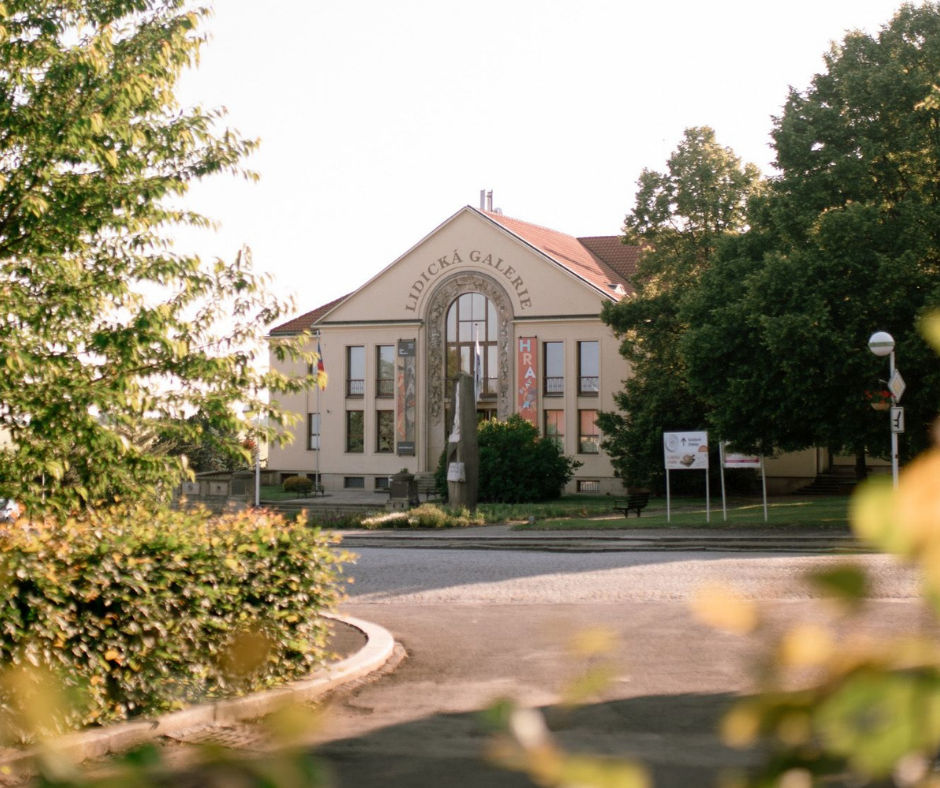
The Lidice Memorial is one of the most significant sites of remembrance in Czech collective memory. Around a hundred thousand visitors from the Czech Republic and abroad come every year, and most of them head for the memorial grounds and the adjacent museum, whose permanent exhibition And the innocent were guilty… tells the tragic story of Lidice and its inhabitants during the Protectorate of Bohemia and Moravia. The Lidice Memorial also includes other exhibition spaces where visitors can learn about the post-war history of the village: the exhibition We are building new Lidice in house no. 116 is devoted to the construction of the new Lidice, and the building of the Lidice Gallery houses the exhibition of the Lidice Art Collection. Several parallel stories thus meet at the memorial, bearing witness to how closely the fate of Lidice was bound up with the defining historical events of the second half of the 20th century.
Small institutions, big stories
Despite its significance, the Lidice Memorial is a relatively small institution, and as is often the case in small organisations, a limited number of positions means that roles overlap. Staff at the ticket desks therefore also act as guides and custodians, expected to explain how the museum works as well as what each exhibition contains. In practice, this means that everyone working in direct contact with visitors has to master both the knowledge needed to run day-to-day operations and the background information about the exhibitions they supervise. In the historical exhibitions, the objects on display are held together by a specific narrative directly tied to the history of the village of Lidice, but in the case of the Lidice Art Collection, the specific context in which it came into being makes it harder to open up to visitors.
Despite its significance, the Lidice Memorial is a relatively small institution, and as is often the case in small organisations, a limited number of positions means that roles overlap.
The Lidice art collection was founded after the war on the initiative of the British physician and Member of Parliament Sir Barnett Stross, who called on artists from around the world to express their solidarity with the village's tragic fate by donating a work of art to a gallery that was to be built in Lidice. Within a single year, Lidice received more than 300 works, and that number later grew with pieces from exhibitions organised by the influential gallerist René Block, who secured works by a number of major contemporary artists for Lidice. The Lidice Art Collection therefore did not come about through the traditional boundaries of an artistic discipline, medium or region, but as an expression of international support and compassion after the Second World War. As a result, it is a highly diverse collection, containing works rooted in regional avant-garde and neo-avant-garde movements whose significance can be hard for the ordinary visitor to grasp.
A guide everyone can understand
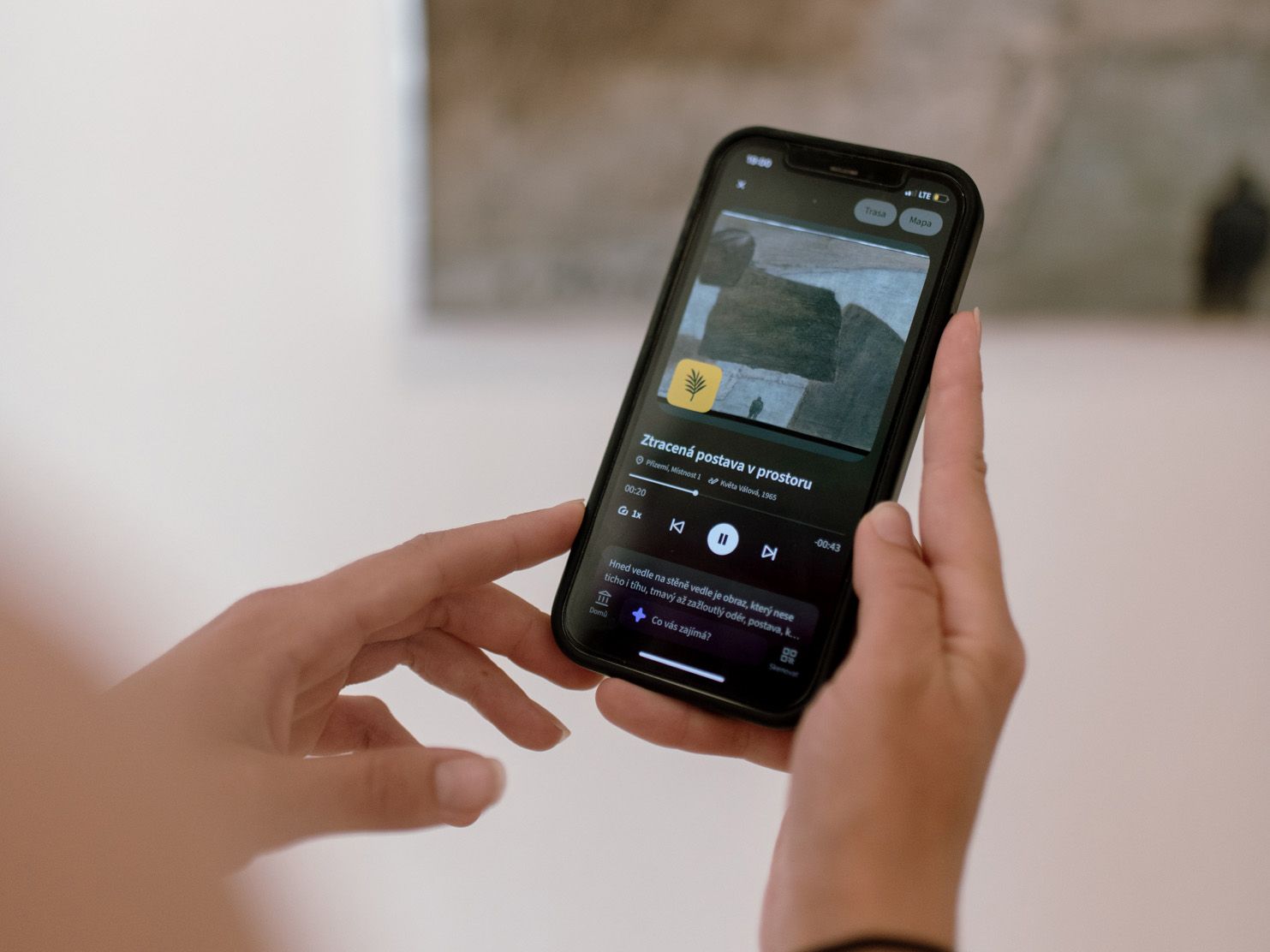
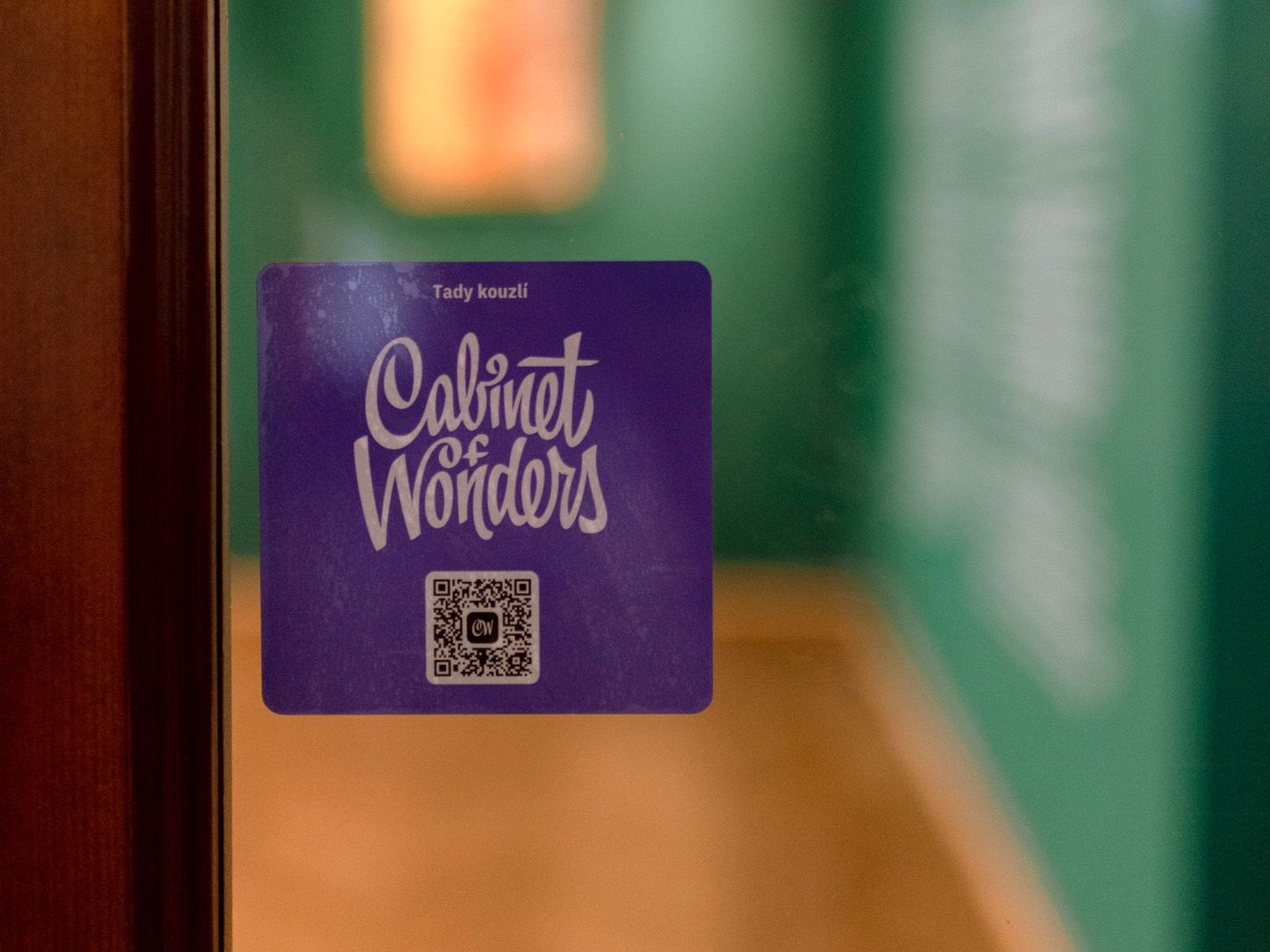
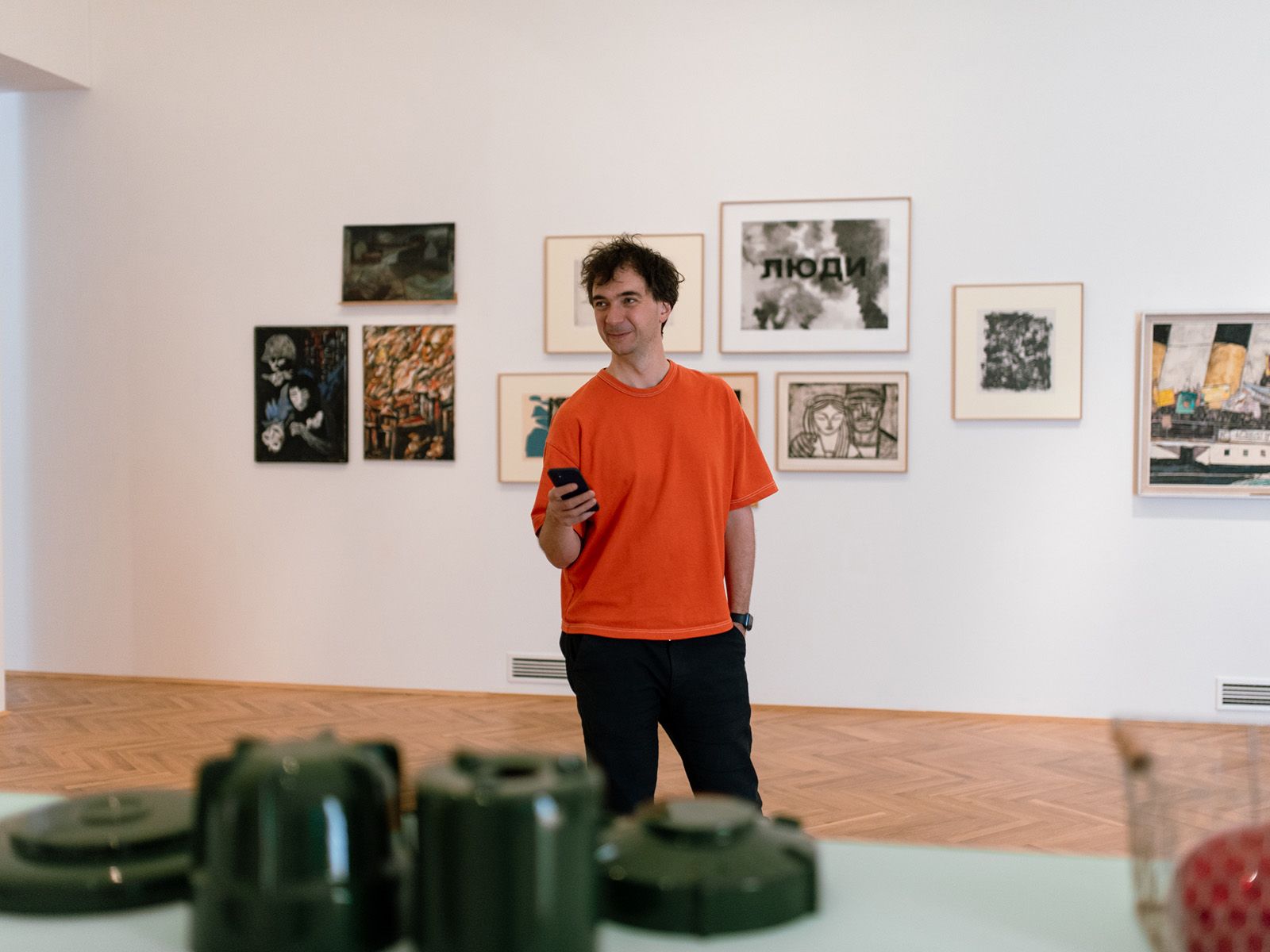
The wish to make the Lidice Art Collection more accessible to a wide range of visitors was one of the main reasons why the Lidice Memorial team and the collection's curator, Miloslav Vorlíček, decided to work with Cabinet of Wonders. Visitors can now discover the specific context in which the Lidice Art Collection came about, along with selected works, in a mobile guide that memorial staff point them to and that QR codes throughout the gallery link to. According to Miloslav Vorlíček, the app is an ideal complement to the work of the guides, because it gives visitors an extended expert commentary tailored to the particular character of the exhibition and grounded in the curator's own art-historical research. Anyone interested can simply download the guide to their phone or borrow a device at the ticket desk, which helps explain why up to 90% of visitors use the app. Listening to the guide also considerably extends the time visitors spend in the exhibition, as most of them walk the entire route, which takes just under an hour.
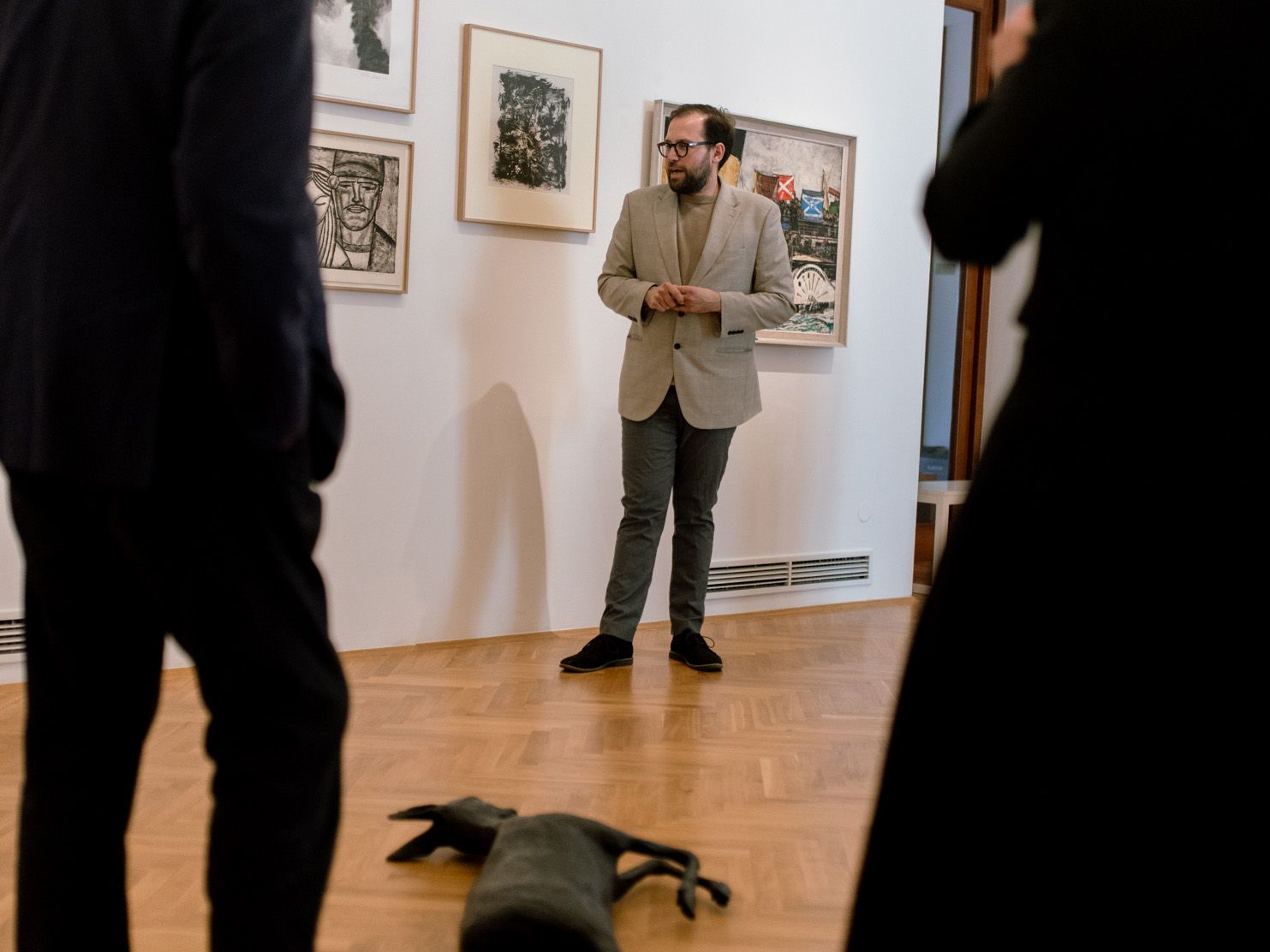
What keeps visitors in the gallery is not only the guide itself, but also the carefully prepared curatorial storytelling. It is clear from listening that these are not catalogue labels copied across, but texts written specifically for the app, in the same tone the curator uses on guided tours. The individual stops are short, they navigate visitors clearly through the space, and they use language that is not overly academic. The interpretations of the works build on one another, which sparks curiosity and the urge to listen to the next track. From what memorial staff have seen so far, visitors rate the quality of the guide very highly, including when they listen in other languages. The narration flows well and the narrators' voices are convincing; minor hitches appear only occasionally, for instance in the pronunciation of names or place names. According to the curator, some visitors explicitly appreciate that listening helps them remember particular works and facts better, because the commentary is not overwhelming and leads them naturally through the exhibition.
Using artificial intelligence to create a Cabinet of Wonders guide removes the need to buy special devices, arrange translations or organise recording sessions, which significantly reduces both the time and the cost involved.
For a long time, an audiovisual guide was something only institutions with a budget resembling that of a small planetarium could afford. But using artificial intelligence to create a Cabinet of Wonders guide removes the need to buy special devices, arrange translations or organise recording sessions, which significantly reduces both the time and the cost involved. That, in Miloslav Vorlíček's view, makes it an ideal solution for regional organisations with limited resources, where the collection and the running of the gallery are often in the hands of just a few people. Still, what makes a guide succeed is not only its flexibility across languages and systems, but also how engaging the storytelling it delivers to visitors is.